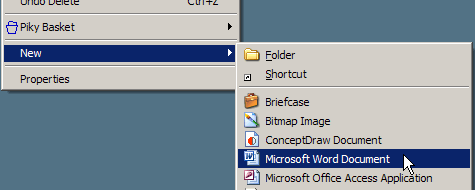
To quickly create a new document, you can use a desktop shortcut:
- Right-click on an empty area of the Windows desktop.
- Click on New
- Click on the program that you want to start
Excel tips and tutorials

To quickly create a new document, you can use a desktop shortcut:
If you’re having problems with an Excel file, using the built-in repair feature might fix the problem.
For example, doing this repair procedure can help when:
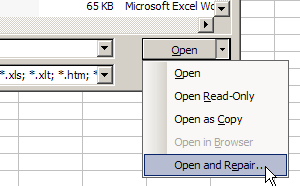
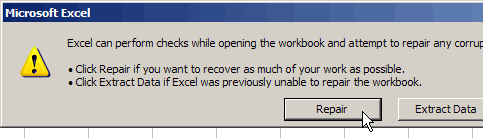
To repair an Excel workbook, follow the steps below:
I hope the repair was successful, and your Excel file is working correctly now. If so, be sure to make backup copies of your work!
If the repair was not successful, you can follow the same steps, but click Extract Data instead.
You might be able to retrieve all of the data, at least, or parts of the data.
And again, remember to make frequent backup copies of your work!
When working on my laptop, especially with a second monitor plugged in, it’s sometimes hard to find the mouse pointer. Too often, this happens in the middle of a meeting, while I’m trying to demonstrate something to a client.
To make the pointer easier to find, you can use one of the built in features:
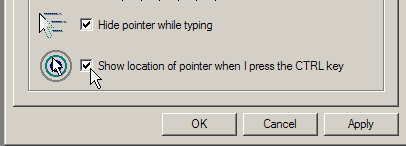
The next time you lose the pointer, press the Ctrl key, and circles will flash on the screen, showing its location.
If you frequently type the same responses to email questions, you can use an email response template to make things easier.
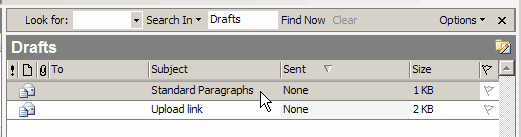
Next time you need one of the standard responses, open the Standard Paragraphs draft message, copy a paragraph from there, and paste it into your current email.
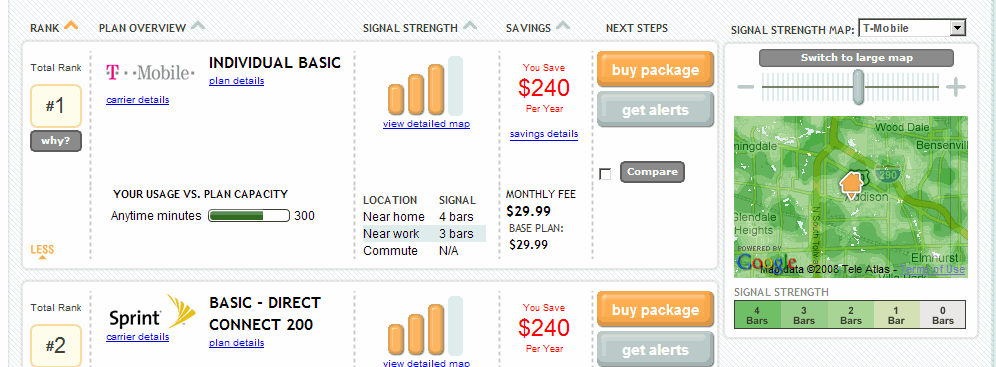
To compare phone plans in your area of the USA, you can use the free online tool at the Bill Shrink site (no longer available)
Enter your minutes per month, current monthly fee and zip code, and a ranked list of plans is provided.
Some great advice is found in Getting Real, by 37signals. For example, they advise against holding meetings, whenever possible, but…
“For those times when you absolutely must have a meeting (this should be a rare event), stick to these simple rules:

On my own computer, I like to see the full menus in Excel, so I selected that setting:
However, when visiting a client, I sometimes have to use another person’s machine, and I don’t like to change their settings.
If the full menus option has not been turned on, here’s what happens:
Then, to see the full Excel menu, you can:
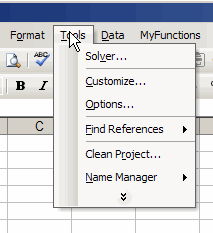
And here’s a way to avoid waiting to see those full menus.
I like to do this, if I’m on someone else’s computer, and not sure if full menus are enabled:
While typing a document in Microsoft Word, you usually have your hands on the keyboard. To add a line border, you can reach for the mouse, click on the border tool drop-down, then click on a border.
A quicker way to add the line is to type three hyphens (—), then press Enter.
To add a thick border, use three underscores (___) and to add a double border tpe three equal signs (===).
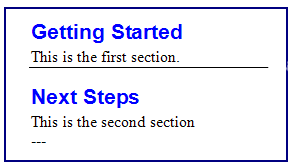
If this technique doesn’t work, choose Tools ► AutoCorrect Options. On the AutoFormat As You Type tab, add a check mark to Border Lines, in the Apply As You Type section.
To add some visual interest to a worksheet, change a comment’s shape from its default rectangle.
Here are the steps to change a comment shape in Excel 2003:
In this example, the Cube shape was selected from Basic Shapes. It looks a bit like a “big box” store!
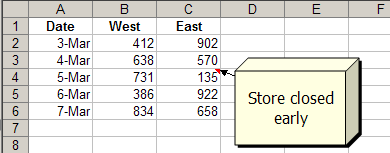
I wouldn’t change the shape of too many comments on a worksheet, or it could be very distracting and possibly confusing.
Just do this for one or two comments, that you want to stand out from the others.
__________________
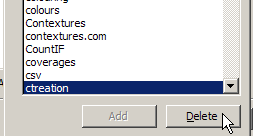
While rushing through a spell check in Excel, you accidentally added an incorrect word to your custom dictionary. Now that it’s in there, how do you get it out?
If you’re adventurous, you can use a text editor, such as NotePad, to modify the dictionaries, which are found in:
C:\Documents and Settings\YOUR_NAME\Application Data\Microsoft\Proof
Or, you can modify the list in Microsoft Word, which I find easier: